
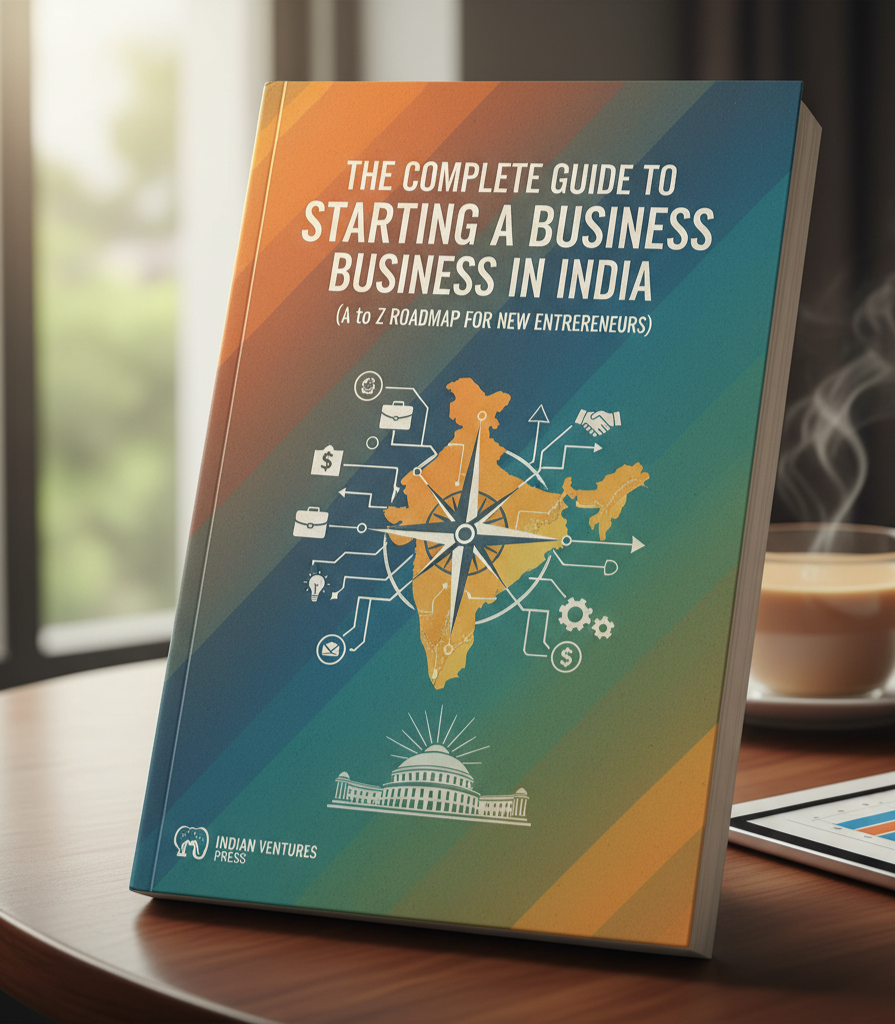
The Complete Guide to Starting a Business in India (A-to-Z Roadmap for New Entrepreneurs)
Starting a business in India has never been more exciting and accessible. With government initiatives like Startup India, Digital India, Make in India, and the rapid growth of e-commerce, technology, and manufacturing, millions of aspiring entrepreneurs are taking the leap toward building their own ventures.
However, turning an idea into a legal, profitable, and scalable business requires following a structured roadmap.
This guide breaks down every step—from choosing an idea to launching and scaling your business—so you can confidently start your entrepreneurial journey.
1. Choosing a Business Idea
Every successful business begins with a clear idea. Your business idea should fall under one of these categories:
✓ Problem-solving ideas
Solving a pain point (e.g., logistics, payments, health-tech, manufacturing).
✓ Skill-based ideas
Using your expertise (e.g., graphic design, consulting, software development).
✓ Passion-driven ideas
Turning a hobby into a business (e.g., food, fitness, crafts).
✓ Market-trend ideas
Ideas based on rising opportunities (e.g., IoT, EVs, GPS, AI tools).
How to evaluate your idea
- Does it solve a problem?
- Can it generate profit?
- Is there competition?
- Is the demand sustainable?
- Do you have the skills/resources to run it?
2. Market Research and Validation
Before investing time and money, validate your idea using structured research.
2.1 Market Research Methods
- Primary Research: Surveys, interviews, customer feedback
- Secondary Research: Industry reports, competitor analysis, government data
- Digital Research: Google Trends, social media insights, product reviews
2.2 Validate Your Idea
- Create a basic prototype or sample
- Offer it to potential users for feedback
- Analyze competitor pricing & reviews
- Check if customers are willing to pay for your solution
Market validation helps avoid costly mistakes and ensures your idea meets real demand.
3. Picking a Business Model
Your business model defines how your business will make money.
Some popular models include:
✓ Product-based model
Selling physical goods (e.g., electronics, machinery, clothing)
✓ Service-based model
Providing services (e.g., consulting, designing, repair services)
✓ Subscription model
Monthly or yearly recurring revenue (e.g., SaaS tools, membership clubs)
✓ Marketplace model
Connecting buyers and sellers (e.g., online platforms)
✓ Manufacturing model
Producing goods for B2B or B2C customers
Choose the model that best matches your skills, capital, and long-term vision.
4. Selecting the Right Business Structure
In India, you can choose from multiple legal structures. Each has its benefits, compliance needs, and costs.
| Structure | Best For | Advantages | Limitations |
|---|---|---|---|
| Proprietorship | Small traders, freelancers | Easy, cheap, no ROC compliance | No limited liability |
| Partnership | Family-run or shared business | Easy to form | Partners have unlimited liability |
| LLP | Small-medium firms | Limited liability | Moderate compliance |
| Private Limited Company | High-growth startups & manufacturers | Limited liability, funding-friendly | Mandatory annual filings |
| OPC (One Person Company) | Solo entrepreneur | Limited liability, single owner | Turnover restrictions |
Most scalable businesses prefer Private Limited or LLP structures.
5. Registration Steps
Depending on the structure chosen, registration requirements vary:
5.1 Proprietorship
- Aadhaar + PAN
- Business bank account
- Udyam (MSME) registration
- GST (if applicable)
5.2 LLP Registration
- Apply for DPIN
- Reserve company name
- File incorporation through MCA
- Draft LLP agreement
5.3 Private Limited Company Registration
- Obtain DSC (Digital Signature Certificate)
- Apply for DIN
- Reserve company name
- File incorporation with MCA (SPICe+ Form)
- Obtain COI (Certificate of Incorporation)
- Apply for PAN, TAN
- Open bank account
5.4 Other Mandatory Registrations
- GST
- MSME (Udyam)
- Shop & Establishment License
- Professional Tax (state specific)
6. Licenses Required by Sector
Different industries require different licenses. Here are the most common ones:
Manufacturing
- Factory License
- Pollution NOC
- Fire Safety NOC
- MSME Registration
Food Business
- FSSAI License
- GST
- Trade License
Import/Export
- IEC Code
- GST
Electronics / GPS / IoT Manufacturing
- BIS Certification
- WPC Approval
- ISO Certification
- E-Waste compliance (if applicable)
Retail / Trading
- GST
- Trade License
Always verify sector-specific rules before launching.
7. GST, MSME, and Startup India Registration
7.1 GST Registration
Required if:
- Turnover exceeds ₹40 lakh (goods) / ₹20 lakh (services)
- Selling online
- Interstate business
Benefits:
- Legally sell across India
- ITC (Input Tax Credit)
- Builds business credibility
7.2 MSME (Udyam) Registration
Benefits:
- Loan subsidies
- Cheaper interest rates
- Tender preferences
- ISO reimbursement
- Protection against delayed payments
7.3 Startup India Registration (DPIIT)
Benefits:
- Tax holiday for 3 years
- Funding & incubators
- Relaxed norms
- Priority in tenders
- Networking support
8. Opening a Business Bank Account & Accounting Setup
Once your business is legally registered:
Open a Current Account
Required documents:
- PAN
- GST certificate
- COI (for Pvt Ltd/LLP)
- Address proof
Set Up Accounting
Use tools like:
- Tally
- Zoho Books
- QuickBooks
- Vyapar
- Busy
Essential financial records:
- Sales & purchases
- Expenses
- GST records
- Payroll
- Asset register
You may also hire a part-time accountant or CA.
9. Hiring Employees & Legal Compliance
If you plan to hire employees, ensure compliance with:
Employment Laws
- Offer letters
- Appointment contracts
- Wage rules
- PF & ESIC (based on employee count)
- Gratuity (after 5 years of service)
- HR policies
Labour Compliance
- Shops & Establishment Act
- Minimum wage compliance
- Leave rules
- Working hour limits
Payroll Setup
- Salary structure
- PF/ESIC deductions
- Payroll software
- Monthly filings
10. Launch, Marketing & Scaling Your Business
Once the foundation is ready, your focus should be on growth:
10.1 Build Online Presence
- Professional website
- Google My Business
- Social media pages
- WhatsApp Business API
10.2 Branding
- Logo & brand identity
- Product photos
- Catalogues, brochures
- Packaging
10.3 Marketing Strategy
- SEO + content marketing
- Facebook & Google Ads
- Influencers & brand ambassadors
- Local marketing
- Email & WhatsApp automation
10.4 Sales Strategy
- CRM setup
- Lead generation
- Follow-up system
- Distributor/reseller network
10.5 Scaling the Business
- Expand product range
- Apply for funding
- Upgrade to a Pvt Ltd (if required)
- Franchise model
- Export opportunities